Auto Matedtrading

  • Subscribe to our RSS feed.
  • Twitter
  • StumbleUpon
  • Reddit
  • Facebook
  • Digg

Sunday, 5 February 2006

Polo : Mint With A Hole

Posted on 21:11 by Unknown
Brand : Polo
Company : Nestle
Agency : Lowe


Polo is the market leader in the mint candy category in India. This is a brand that has created lot of excitement in the market with its smart advertising and promotion.
The history of Polo dates back to 1725 when Rowntree opened a tea and coffee shop in York. In 1948, they began selling Polo Mint candy. The company changed hands and in 1988 Nestle bought the company over. Polo was launched in India in 1994.

The word Polo is said to be derived from the word Polar . The word points to the cool and fresh feeling gained after taking a freshener like Polo.
Polo comes under the Adult confectionery market which is estimated to be around 1100 crores. Polo is the market leader in the mint based lozenges category.
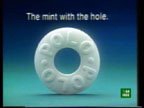
Polo is famous for its positioning as a " Mint with a Hole " which created lot of excitement for the brand. The campaigns portrayed the unique shape as a differentiating factor. The campaigns was humorous and the product gained instant market.

The category is now facing lot of competition. Big players like ITC and Perfetti is eyeing this category seriously. ITC have acquired MintO from candico in 2002 and aggressively promoting the brand with the positioning " unusually Cool". Candico earlier pitted MintO as a Mint without a hole thus challenging Polo headon. Then ITC repositioned Minto as a cool brand. There are other players like Chlor-Mint getting aggressive in this market.

Nestle recently have done away with its successful positioning based on the Hole. The brand changed the agency to Lowe. The current campaign talks about the cosmetic benefit and value addition. The ads talks about whistling while eating Polo with the baseline " Polo ghao seethi bajao" which does not create any meaningful impact on the TG.
Polo was successful in the market because of smart ads and some innovative product strategies like Polo holes in sachets at a very low price point. But recently the company has discarded the age old positioning of Mint with a Hole . This shift together with some ineffective ads can prove to be a watershed for the brand. The fresh breath proposition is already taken by the competitors.The competing brands are also making innovations in the products like coming out with flavours other than mint, sugar free variants etc.
Polo will have to work hard on its product strategy to keep the market it had created.
Read More
Posted in branding, FMCG, Nestle | No comments

Thursday, 2 February 2006

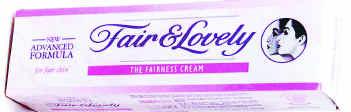
Fair & Lovely : Chand ka Tukda

Posted on 23:02 by Unknown
Brand : Fair & Lovely
Company : HLL
Agency: Lowe


Fair & Lovely ( FAL) is the brand that revolutionized the Indian Skin care industry. This brand is World's first and largest Fairness cream brand with a presence in 40 countries and a value of around Rs. 6 billion

Indian skin care market was dominated by conventional beauty care products like Bezan,Multani Mitti etc. FAL changed all that. Launched in 1975, FAL is the product born in the Unilever research center. In 1988 the brand went international. FAL commands a market share of over 70% in the Rs 1000 crore fairness market in India.
FAL virtually created and owned this category for long. In the fairness market, FAL enjoyed monopoly till Cavin Kare entered this lucrative segment with Fairever. The success of Fairever prompted many players like Godrej to tap the market.


FAL sustained the pressure from the competitor by careful branding and new product launches. The brand never failed to emulate and learn from the competitor .When Fairever launched the ayurvedic variant, FAL launched a much better variant. Then came the competition from Ozone Ayurvedics with their brand No Marks trying to carve a niche. HLL countered with FAL Antimarks and launched a controversial comparative ad that took the steam out of No Marks.
When Fair ever launched the soap, FAL also responded with soap. FAL never allowed the competitors to gain an upper hand in the market which it created.
FAL achieved such tremendous success because of careful branding and ad campaigns. Initially HLL to do some ugly talking about fairness. Some of the ads were controversial because of gender inequality and stuff like that. It was necessary at that period because the category was new and the brand should first talk about the need to be fairer.
Now the brand has laddered up to more aspirational values like "Transformation of Women" The insight is that the transformation will be more than skin deep. The ads showing a girl achieving the ambition of being a cricket commentator ( a male bastion) were very much effective in connecting with the TG.
HLL has also extended the brand to more aspirational values by launching Fair& Lovely foundation that works for Women Empowerment achievement and Transformation which are the qualities for which FAL stands for.
FAL have also launched a premium subbrand Perfect Radiance to tap the premium segment of the market.
Fair & Lovely was able to dominate the fairness market because of careful marketing and is a showcase of the marketing genius of HLL.
Read More
Posted in branding, FMCG, HLL, personal care, soap brands | No comments

Monday, 30 January 2006

Ultratech Cement : The Engineer's Choice

Posted on 20:26 by Unknown


Brand: Ultratech Cement
Company : Ultratech Cemco ( Aditya Birla Group)
Agency : Leo Burnett


2005 saw one of the high profile brand launches in the country. The launch was significant and different because it was the launch of a cement brand. Another uniqueness was that it was a rebranding exercise. L&T's cement business was acquired by Aditya Birla Group in 2004 for Rs 2200 crore making Grasim the 8th largest cement producer in the world.

Grasim was having cement brands like Birla plus and Birla super in the 150 mn TPA Cement market in India. L&T was a leading brand in the premium segment of the cement market. The acquisition gave Grasim an entry into the premium segment of the market.

L&T cement which enjoyed leadership position in the premium cement market epitomized engineering prowess , technology quality and modernity. This has enabled the brand to command a premium over the other cement brands. Grasim was allowed 8 months to use the L&T brand.

Grasim was faced with a tough task. The time was short and there were two choices, merge the L&T brand with existing Grasim brands or launch a new brand . The company decided on the later and did it with style.

The name Ultratech was chosen after careful marketing research. Since L&T does not mean anything by virtue of the brand name, Grasim wanted the new brandname to portray significant intrinsic value of the brand. Hence the name Ultratech was chosen. Since Grasim didnot want to dilute the premiumness that L&T enjoyed, a high decibel ad blitz was launched to announce that L&T is now Ultratech. The campaigns was backed with direct marketing where the company officials met the 5500 odd stockists and authorised dealers explaining the new brand and company policies.


The campaign had lot of significance.
1. It had to make sure that the new brand did not lose the qualities of L&T
2. The new brand should be able to command the same level of premium of L&T.
3. Time was short
4. It was a risky affair.
Cement is basically viewed as a commodity and the industry is fragmented with around 50 players. So inorder to command a premium, the brand had to show a significant differentiation.


Ultratech was positioned as the ' Engineer's choice" cement emphasizing on the qualities such as Quality, Modernity and technology. The gamble has paid off well for Aditya Birla group and Ultratech was able to carry the legacy of L&T cement.

Ultratech is a classic case of Marketing a commodity.
Read More
Posted in branding, branding commodity, cement brands, corporate brand | No comments

Thursday, 26 January 2006

Parle Digestive Marie : Can u build a brand on Bullshit?

Posted on 20:11 by Unknown

Brand : Parle Digestive Marie
Company : Parle
Agency : Everest


Parle digestive Marie is the new launch by Parle in the 600 crore Marie biscuit segment. The brand is being promoted heavily across the mass media making it one of the high decibel product launches in 2006.

The brand is endorsed by Kajol who according to media reports charges around 80 lakh per endorsement. The brand according to the company is first of its kind in the segment. The product claims to have five times the fiber and low calorie. The campaign is also revolving on this platform. According to the agency the idea of the campaign comes from the insight that " the biscuit is so healthy, it is criminal not to consume this biscuit".


Having raved about the product qualities, let me come to the brand promotion. I feel that the campaign is crap. I may buy the product because the product is good but not because some Anti Marie bureau has ignited the passion in me.

The celebrity endorsement and the crap ad have caught the attention of the market for sure ( may be for the wrong reasons). But where will the brand go from here?. The competition will have their version within no time, so what is the future of Anti-Marie bureau? Did the brand highlighted any significant positioning. ' Yehi Marie Sahi Marie " and the Anti-Marie bureau are self contradictory. Is Digestive Marie not a Marie?

I think the target audience are not kids but adults who are health conscious. And the ads may have amused the TG. But should you promote such a good product with some seriousness?

With the teaser ads and the 60 minutes TVC may have burnt a hole in Parle's pocket and Iam sure that the initial sales will justify the cost. But Parle may have to spent that much money too often to sustain the sales.

Is short termism becoming a disease among brand managers?

No one have ever built a brand over a Bullshit.....

Read More
Posted in branding, FMCG, Parle | No comments

Tuesday, 24 January 2006

Palmolive : Palmolive Da Jawab Nahin

Posted on 20:48 by Unknown
Brand : Palmolive
Company: Colgate
Agency : Rediffusion

Palmolive is one of the oldest brands in the country. It was launched in India in 1937. Owned by Colgate- Palmolive ltd, the origin of this soap dates back to 1898 . BJ Johnson company, owned by a person known as Caleb Johnson introduced a soap made from Palm and olive called as Palmolive. The soap was such a huge success that the company changed the name to Palmolive in 1917. It merged with another soap making company Peet Brothers to become Palmolive Peet. It later merged with Colgate in 1928.
Palmolive in India did not have a success story to boast about. Colgate marketed its personal care products like soaps , shampoo and shaving preparation products under the Palmolive brand name.
Palmolive was a reluctant brand which was never a serious player in the Indian personal care market. Although the brand comes from one of the most respected FMCG companies in the world, it never fully realised the potential.

Palmolive soaps were of high quality and competed in the premium segment of the soap market. The cream soap and the nice fragrance were a hit during the eighties and nineties. But some where the brand lost its way. Palmolive was not able to create a meaningful differentiation in the crowded soap category. Facing stiff competition, the brand shed the premium image and went after price discounts and freebies.


Compared to the soaps , Palmolive shaving cream fared well. In the 150 crore shaving preparation market , Palmolive had a share of 21%. Palmolive earlier used Kapil to endorse the shaving cream and the baseline " Palmolive da jawab nahin" is still famous. In the shaving cream market also , the brand is languishing because of lack of support from the company. The shaving preparation category is more functional oriented where what matters most is the product performance. The category is witnessing a sea change with the customer preference shifting from cream to gel and foam. At present, the category is dominated by Gillette.
Of late Colgate is now focusing on personal care with a series of product launches. In 2003 Palmolive launched Aroma variant with extracts from Orchid and jasmine. The product has been well received. In 2004 Palmolive launched a shower gel variant which is a new category . The product is promoted along the baseline " Ignite your senses".


I have been researching this brand but there is very less data available with regard to the campaigns and launches which shows that there is nothing much to write about this . Well for a marketer it is the most pitiable situation when nothing can be written about the brand: be it good or bad.


Palmolive is a brand that is trying to revive itself. But for that the brand should decide on what it want to be? May be the answer is with the customer.
Read More
Posted in branding, Colgate, FMCG, personal care | No comments

Sunday, 22 January 2006

Bajaj Chetak (1972-2005) :RIP

Posted on 20:52 by Unknown
Brand : Bajaj Chetak
Company : Bajaj Auto Ltd

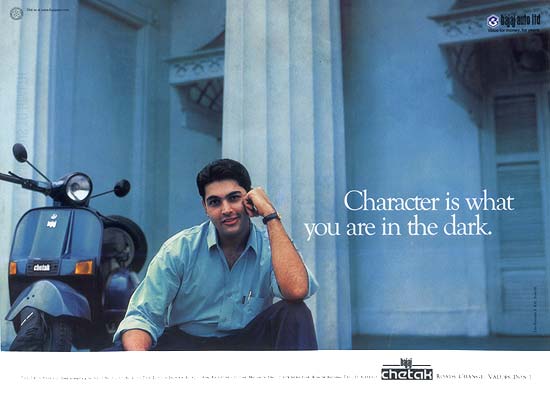
The brand which ruled the Indian roads have been laid to rest. Bajaj has officially stopped the production of Bajaj Chetak from December 2005. The stocks will last may be upto March 2006. The company says that the product no longer have any relevance to the customer. To quote Rajiv bajaj " Any one who clings to the past is a failure".
I owned a Chetak: a gift from my father for having secured admission to MBA program. It was in the year 1996. Later I exchanged it for a bike in 2001. Still Chetak lingers in me ( or rather haunts me) in the form of " Back Pain".
The brand which was launched in 1972 virtually owned the two wheeler segment. If reports are to be believed, Chetak was an unavoidable dowry in 1970's and 80's. It had a waiting period of more than 10 years ( can you believe it ? ) and now here I am after 34 years, writing the epitaph of this brand.
The brand which was named after the legendary stallion of the Rajput king Maharana Pratap, was known for the reliability and sturdiness. The brand thrived during the license raj with virtually no competition. It was during 1990-91 that the brand began the journey to the end.
Bajaj Chetak had a huge brand equity . The brand had the persona of a " work horse". With reasonable price and the low maintenance cost made this product a huge hit among the middle class Indians.
Promoted along the base line " Hamara Bajaj", this was the Indian Family vehicle - a position now owned by Maruthi 800.
But then How can a brand that was so popular and successful fail?
Frankly, I am not sure. But here is what I think about this brand...
The primary reason is that the Brand forgot the customers. Another case of Marketing Myopia. The company failed to understand the changing perception of the customers towards scooters. Rather than looking at the customers, the company focused on influencing Government to block the opening up of economy. Bajaj never did anything with the product. For 40 years Chetak had the same look, same quality and style.
During the mid nineties the company realised lately that the segment has shifted to motorcycles. Scooters were no longer the option. But did the company made a mistake in discarding the scooter segment ? Looking at the way the share prices are going, the market thinks that Bajaj Auto made the right decision. But I think that they made a mistake in leaving the scooter segment completely. Contrary to expectation, the scooter segment has not died. It has only changed.
Chetak lost its identity some where during the nineties. What should be the future of the brand : no body knew. It was only in 2004 that company made any change in Chetak. In 1994 Bajaj introduced Classic another scooter with same style as Chetak, but failed.
Bajaj never was serious about product development. The R&D spent for a long time was a miniscule 1%. The average cycle time for the new product development was 4-5 years compared to 2-3 years of Japanese competitors.
Even after the opening up of economy, the scooter segment did not witness much competition.
The players like Vespa did not had much of success in this segment. Kinetic Honda managed to carve a niche with its gearless scooters. Another segment which was growing was the scooterette segment which was dominated by TVS scooty.
Bajaj never seriously looked at customer perception about Chetak. The product had serious problems like starting trouble and riding comfort. The " Tilting the chetak to the side for starting " was a common joke. Did the company do anything for that ? no
There was nothing wrong with the Promotion. " Hamara Bajaj " and " No one can beat a Bajaj " were famous base lines. There was nothing wrong with distribution and the pricing was very reasonable. The major problem was in the first P : Product.
So without addressing any problems regarding the product , can you expect the customer to buy the product ?
Bajaj was never a leader in technology ( now they are !!!). They never bothered to and paid the price . Had Chetak pioneered Electric start, had it provided more riding comfort, it could have survived.
Somebody have just beat the Bajaj........ the customer!
Read More
Posted in automobile brands, Bajaj, branding, failed brands, marketing myopia | No comments

Friday, 20 January 2006

Rasna : I love U Rasna

Posted on 10:05 by Unknown
Brand : Rasna
Company: Pioma Industries
Agency: Mudra


Rasna is the market leader in the Rs 250 crore Indian Soft drinks concentrate industry. The SDC industry is miniscule compared to the 5000 crore carbonated soft drink industry ( CSD). The powdered softdrink concentrate industry is worth around 90 crore.
Rasna pioneered this category and virtually owns this market with a market share of 93%.
Rasna was launched in 1982 by Pioma Industries Ltd. Rasna positioned its product on the economy platform. The company aims to capture the customer's " every moments of thirst " using Rasna.
Rasna tried to concentrate on three major attributes for establishing itself in the market
1. Economy per glass
2. Taste
3. Children's affinity towards the product.
Rasna always wanted itself to be perceived as a value for money product. The " price advantage " was promoted heavily and customers were given the details of how each glass of rasna will cost compared to other softdrinks. Rasna began with 9 flavours in 1982. The 10th flavour was added in 1987. Rasna was using children in advertising the brand. Like the Johnson's baby, Rasna girl was very popular among the public. Rasna have used the catchy baseline " I love u Rasna " for decades. Even now people remember Rasna Baseline.
Rasna in 2002, decided on a make over. The company no longer wanted to be a kid's drink. It dawned a new look with new logo and a new baseline " Relish a gain" highlighting the economy of using Rasna. Rasna also tried lot of new products and variants. Realising that the market has shifted to "health and natural " proposition, Rasna launched a new product "Juc fit" which is a fruit based health drink. The new Leaf logo also signifies this shift. The logo signifies value for money and health( the company claims).
Rasna also entered the 1000 crore milk foods category with its Shake Up brand which has not been able to make a dent in to the highly competitive market dominated by the likes of Horlicks and Complan.
Rasna also tried to take the competition for Colas by launching "Rasna Cola Cola" and has roped in Hrithik Roshan to endorse the brand.
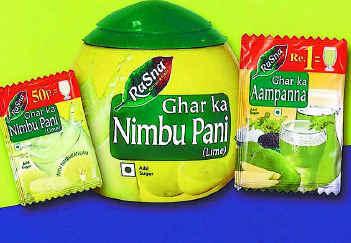
Now Rasna have in the market a subbrands Juc Up ,Rasna International and Utsav in the Powdered SDC category. In 2005 Rasna has launched a range of traditional refreshers like Nimbu pani and Jaljira under the subbrand " Ghar Ka ".
Rasna recently has been struggling to find its soul. All the way it was promoting itself on economy platform which has become redundant because of the competitive pricing from Carbonated softdrinks. It has also changed the famous " I love you Rasna " campaign to " Relish A Gain " baseline which is little confusing for the customers. Customers still remember the Rasna Girl and "I love U " baseline . I am confused why the company changed such a popular baseline?
Rasna is also trying to move away from children and trying to become everything to every one which is a risky proposition. Although the brand has a generic status in the category , it is witnessing stiff competition from Sunfill from Coke.Rasna is trying to excite the market with new products and variants .
Rasna as a brand has lost its soul, not knowing what it stands for, trying to become everything to everyone. What should a brand do when it is confused about its persona? Simple. Ask the customer.
Its worth remembering that there is a child with in all of us. (don't take it literally)
Read More
Posted in beverages, branding, FMCG | No comments
Older Posts Home
Subscribe to: Comments (Atom)

Popular Posts

  • Sunfeast : Spreading the smile
    Brand : Sunfeast Company : ITC Ltd Agency " FCB Ulka Can a cigarette manufacturer succeed in marketing Biscuits? What do management thi...
  • Sona Chandi Chyavanprash: Trying hard: Not smart
    Brand : Sona Chandi Chyavanprash Agency : Ambience Publicis Base line :Sona de surakshit tan, chandi de tez dimaag. Chyavanprash is a 300 cr...
  • Whisper : shhh....
    Brand : Whisper Company: P&G Agency : Leo Burnett The female personal hygiene market in India is in a nascent stage. The market size is ...
  • Parachute : Branding a commodity.
    Brand : Parachute Company: Marico Agency:Ambience Publicis This is a success story of branding of a commodity. Hair oils and its use are dee...
  • Close Up : Kya Ap CloseUp Karthe hain?
    Brand : Close Up Company: HLL Agency:O&M CloseUp is the original youth brand in Indian toothpastes. Launched in 1975, this brand is the ...
  • Parker : Why use a pen that's not a Parker!
    Brand: Parker Company : Luxor Writing Instruments Ltd Agency :Lowe Indian writing instruments industry is worth around 1600 crores . Luxor i...
  • Palmolive : Palmolive Da Jawab Nahin
    Brand : Palmolive Company: Colgate Agency : Rediffusion Palmolive is one of the oldest brands in the country. It was launched in India in 19...
  • Royal Enfield : Royal Indeed
    Brand : Royal Enfield Company : Royal Enfield Ltd Agency : RMG David If you are searching for an Indian Icon which has survived the test of ...
  • Parle Digestive Marie : Can u build a brand on Bullshit?
    Brand : Parle Digestive Marie Company : Parle Agency : Everest Parle digestive Marie is the new launch by Parle in the 600 crore Marie biscu...
  • Yezdi (1961-1995) : RIP
    Brand: Yezdi Company: Ideal Jawa India Ltd A brand that was once the heartthrob of Indian urban Youth is now resting in peace... A case of m...

Categories

  • absurdism in advertising
  • Air Deccan
  • automobile brands
  • Bajaj
  • beverages
  • branding
  • branding commodity
  • celebrity endorsement
  • cement brands
  • Colgate
  • consumer durable brands
  • corporate brand
  • Detergent brands
  • Dettol
  • Diversification
  • failed brands
  • FMCG
  • FMHG
  • Food brands
  • Heritage Brand
  • HLL
  • Horlicks
  • iconic brand
  • Indica
  • Innerwear
  • ITC
  • John Players
  • Jyothi Lab
  • Maggi
  • marketing myopia
  • mobiles
  • Nestle
  • onida
  • Parle
  • personal care
  • proctor and gamble
  • Product life cycle
  • readymade brands
  • Reckitt Benkiser
  • shampoo
  • smcg
  • Snack Foods
  • soap brands
  • stationary
  • Tata
  • textiles
  • Titan
  • Toothpaste
  • Toyota
  • Ujala
  • writing instrument

Blog Archive

  • ▼  2006 (22)
    • ▼  February (2)
      • Polo : Mint With A Hole
      • Fair & Lovely : Chand ka Tukda
    • ►  January (20)
  • ►  2005 (33)
    • ►  December (20)
    • ►  November (13)
Powered by Blogger.

About Me

Unknown
View my complete profile